|
Dear Client,
As the 2024 election approaches, tax policies are at the forefront of national debate, with candidates outlining their visions for the future of American taxation. In this newsletter, we break down the key tax proposals from leading candidates Kamala Harris and Donald Trump, explore recent updates from the IRS, and highlight crucial changes that could affect your finances. Whether you're interested in tax deductions, estate planning, or understanding the tax implications of gambling income, we've covered you with the latest insights to help you navigate the ever-changing tax landscape.
|
|
|
Election Day and Taxes: Key Proposals from 2024 Candidates
As the 2024 election approaches, tax policies from Kamala Harris and Donald Trump have become central topics. Trump advocates for making the 2017 tax cuts permanent, aiming to maintain individual and corporate tax cuts to stimulate economic growth.
In contrast, Kamala Harris proposes raising taxes on high earners while offering relief to lower-income families. Her plan includes raising the top income tax rate to 39.6% for individuals making over $400,000 and introducing a 5% surtax on net investment income for the wealthy. She also aims to tax long-term capital gains at ordinary income rates for those earning over $1 million and implement a wealth tax on individuals with assets over $100 million.
Harris's proposals include increasing the child tax credit to $3,600, providing a $6,000 one-time credit for new parents, and a $10,000 tax credit for first-time homebuyers. She plans to raise the corporate tax rate from 21% to 28% and increase taxes on stock buybacks and corporate earnings over $1 billion. Additionally, she supports green-energy tax credits, tax incentives for building affordable homes and expanding the Dependent Care Credit and FSA limits to ease family expenses.
Trump’s proposed overtime tax exemption would distort work decisions
Former President Donald Trump proposed an overtime tax exemption, aiming to make income earned from overtime work exempt from federal income tax. The plan could provide tax relief but is estimated to cost $680.4 billion over 10 years, potentially exceeding $1.1 trillion if payroll taxes are also excluded. This could lead to exclusion. employees working overtime, making hourly jobs more attractive, while employers might try to manage rising labor costs.
However, the proposal could complicate employer-employee dynamics by encouraging a focus on overtime and adding administrative burdens due to the need to track overtime pay for tax purposes. Critics suggest this exemption would clutter the tax code and argue that simpler ways exist to stimulate the economy and benefit workers.
|
|
|
Estate and Gift Tax Exemption Changes in 2026
Significant changes are expected in the estate and gift tax rules starting January 1, 2026. Currently, the exemption level for estate and gift taxes is $13.61 million per individual ($27.22 million for married couples). This means individuals can transfer up to this amount without incurring federal estate or gift taxes, with a 40% tax rate applied to amounts above this threshold. However, due to sunset provisions in the Tax Cuts and Jobs Act (TCJA) of 2017, the exemption is set to drop to approximately $7 million (adjusted for inflation) if no action is taken by Congress, potentially leading to higher taxation on estates.
There are several legislative proposals under discussion. Some lawmakers might extend the current exemption amount of $13.61 million beyond 2025. Others propose reducing the estate tax rate from 40% to 20%, with either the current or a reduced exemption amount. A more extreme proposal involves completely repealing the federal estate tax. Conversely, progressive proposals suggest reducing the exemption to $3.5 million and implementing higher tax rates for larger estates. As the reduction approaches, high-net-worth individuals may need to accelerate their gifting strategies or explore other estate planning options to manage their future tax liability effectively.
|
|
|
Key Tax Deadlines for October 15, 2024
Several important tax deadlines are coming up on October 15, 2024. Missing these deadlines can lead to penalties, so be sure to keep track:
- Extended Tax Return Filing for Individuals: If you asked for more time to file your 2023 income tax return (Form 1040), October 15 is the last day to file. Make sure you have all your documents ready.
- Extended Filing for C Corporations: C Corporations that asked for an extension also need to file their 2023 tax returns by October 15.
- Retirement Plan Contributions: Self-employed people and small business owners must make contributions to their 2023 Keogh or SEP IRA plans by October 15. These contributions can help lower your taxable income for 2023.
If you need assistance or have questions about meeting these deadlines, get in touch with your account representative at SK Financial CPA to avoid penalties.
|
|
|
|
Tax Rules for Gambling Income
It's crucial to understand the tax rules for gambling income, whether you gamble for fun or as a profession. All gambling winnings, including those from lotteries and casinos, must be reported as taxable income, even without a Form W-2G. You can deduct gambling losses if you itemize deductions, but only up to the amount of your winnings. For example, winning $5,000 but losing $7,000 allows you to deduct only $5,000 in losses. Keeping accurate records of your gambling activities is essential to supporting your claims. Inadequate record-keeping can lead to denied deductions. Professional gamblers report their income and losses on Schedule C, needing to demonstrate that they run a legitimate gambling business.
|
|
|
Federal Taxation of Social Security Benefits
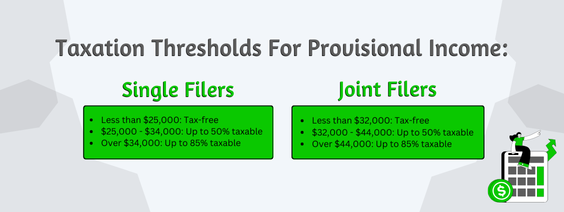
Not everyone pays taxes on Social Security benefits; those whose benefits are their main income may avoid taxes. However, many could owe taxes on 50% to 85% of their benefits based on provisional income, which includes tax-exempt interest, half of Social Security benefits, and other income. To have federal income tax withheld from benefits, individuals can fill out IRS Form W-4V, choosing to withhold 7%, 10%, 12%, or 22%.
The income thresholds for taxing Social Security benefits have remained unchanged for years. Recent proposals suggest increasing these thresholds to $35,000 for single filers and $50,000 for joint filers, but they faced opposition due to suggested tax increases for high earners. Former President Trump proposed eliminating federal taxation on these benefits, but specifics are unclear.
|
|
|
IRS Reminder for Schoolteachers: Up to $300 in Classroom Expenses Deductible for 2024
As the new school year begins, the IRS reminds schoolteachers that they can deduct up to $300 for classroom expenses on their 2024 federal tax return, unchanged from 2023. This deduction is available to teachers, counselors, principals, and aides who work at least 900 hours annually in elementary or secondary schools. Couples filing jointly can each claim up to $300, totaling $600. The deduction covers out-of-pocket expenses for items like books, supplies, equipment, COVID-19 safety measures, and professional development courses, but not for homeschooling or nonathletic health and physical education supplies. Educators should keep detailed records of their expenses.
Foreign Accounts Reporting:
U.S. owners of foreign financial accounts with an aggregate value exceeding $10,000 at any time in the prior year must report these accounts by October 15 using FinCEN Form 114. The penalty for non-willful violations is $10,000 per unfiled FBAR form, while willful violations can incur a fine of the greater of $100,000 or 50% of the highest balance in the account. The IRS has faced challenges with these penalties, and courts have upheld substantial fines, as seen in a recent case involving a $2.9 million penalty.
Deceased Filers
When filing a tax return for someone who has passed away, specific guidelines must be followed. Surviving spouses filing jointly should mark the filing status as “married filing jointly” and include both their name and the deceased spouse’s name and address. At the top of Form 1040, write “deceased” along with the decedent’s name and date of death; most tax software will handle these details. For unmarried decedents, the filing status should be marked as either single or head of household, with “deceased,” the decedent’s name, and date of death noted on the return. If the surviving spouse has dependent children and remains unmarried, they may qualify for the qualifying widow(er) status for up to two years after the decedent's death.
|
|
|
The Corporate Tax Rate Tug-of-War
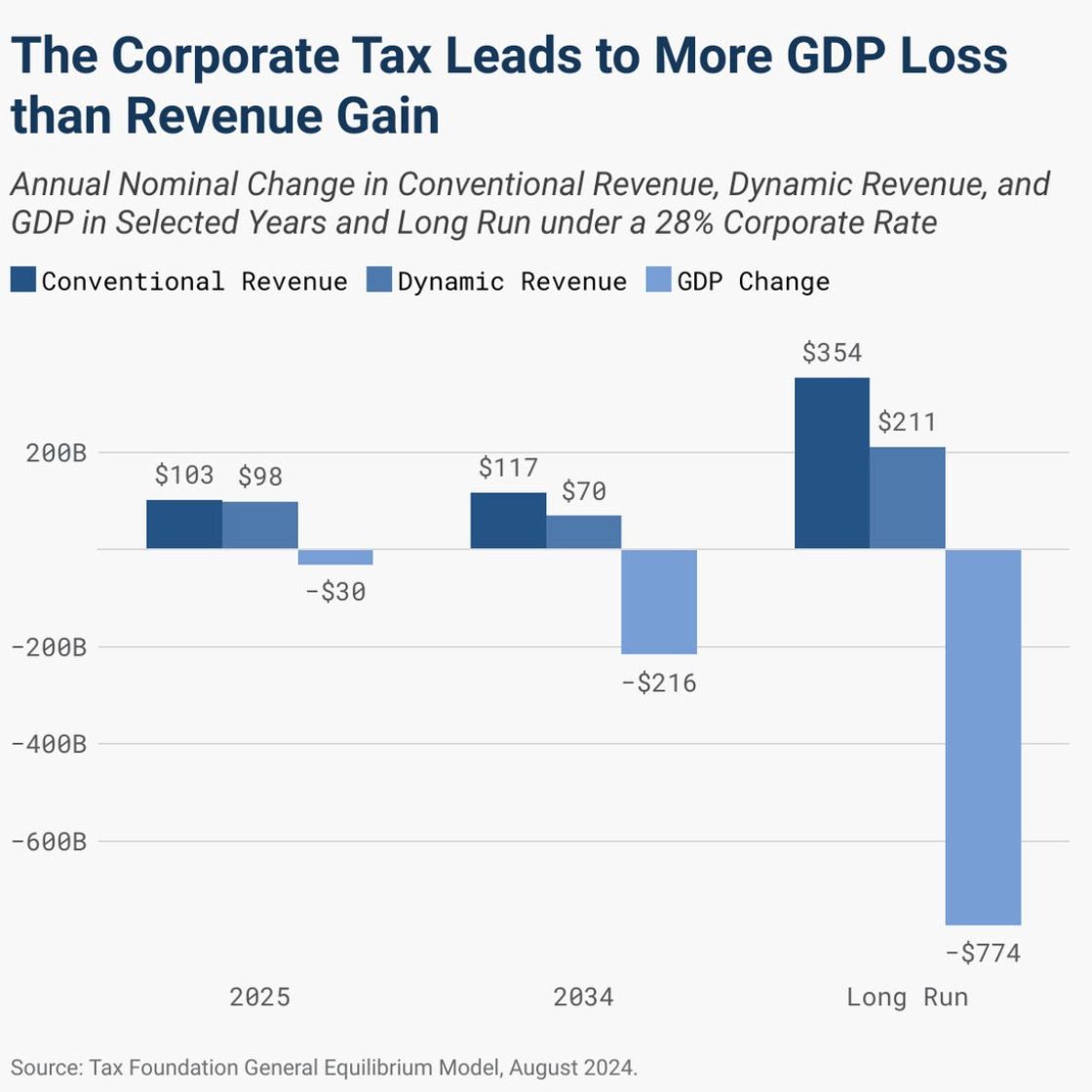
As the 2024 election nears, the debate over corporate tax rates intensifies, with potential changes having significant implications for businesses. The current rate of 21%, established by the 2017 tax reform, may be altered based on election results. Former President Trump proposes reducing it to 15-20%, while Vice President Harris suggests raising it to 28%. Research from the Tax Foundation indicates that increasing the rate to 35% could reduce the economy by nearly 1.4% and result in a loss of around 289,000 jobs. In contrast, lowering it to 15% might increase growth by about 0.4%. Experts caution that higher rates can negatively impact the economy for every dollar raised, with an increase to 28% potentially leading to a $1.84 reduction in GDP per additional dollar of revenue by 2034. Many recommend eliminating inefficient tax expenditures and broadening the tax base instead of raising rates to maintain economic growth.
|
|
|
Taxpayer Right to Finality: Key Points and Time Limits
Taxpayers have the right to finality in federal tax matters, meaning they should be aware of the time limits for contesting IRS decisions. The IRS generally has three years to assess additional taxes after a return is filed and 10 years to collect unpaid taxes, unless extended by agreement or court order. Typically, audits are limited to one per tax year, except in cases of fraud or new information. In situations involving fraudulent or missing returns, the IRS can assess taxes at any time. Collection periods may be paused in certain circumstances, such as bankruptcy. Taxpayers will receive a notice if additional taxes are owed, along with a deadline to challenge the assessment in Tax Court.
Guidance on Alternative Fuel Vehicle Refueling Property Credit
The Treasury Department and IRS have issued the most recent guidance on the Alternative Fuel Vehicle Refueling Property Credit, which applies to refueling property placed in service between January 1, 2023, and December 31, 2032, as amended by the Inflation Reduction Act. The credit covers 30% of costs for non-depreciable property, up to $1,000 per item. For depreciable property, the credit is 6% of the cost, which can increase to 30% if prevailing wage and apprenticeship requirements are met, with a maximum limit of $100,000 per item.
Navigating the Employee Retention Credit (ERC) Disallowance and Updated Amnesty Program
Businesses claiming the Employee Retention Credit (ERC) may face challenges, particularly if they receive IRS Letter 105-C indicating ineligibility. The IRS has provided resources to help navigate these situations and has updated its ERC amnesty program to address incorrect claims. Here’s an organized guide to understanding the latest updates:
Responding to ERC Disallowance:
- The IRS has launched a new page titled "Understanding Letter 105-C, Disallowance of the Employee Retention Credit" to guide businesses and tax professionals.
- It includes steps for rechecking ERC eligibility, instructions on responding to the disallowance letter with required documentation, and outlines how to request an appeal or file a lawsuit, including timelines for each action.
Updated ERC Amnesty Program:
Warning signs and red flags for incorrect ERC claims:
The IRS emphasized key warning signs for incorrect ERC claims, including:
- Claiming ERC without a significant decline in gross receipts or proof of operational suspension due to government orders.
- Including wages paid to family members.
- Overlapping wages is used for the Paycheck Protection Program (PPP) forgiveness.
- Claiming ERC for wages paid to employees who were actively working.
Previously identified issues, such as overclaiming for multiple quarters, incorrect employee counts, and claims based on supply chain disruptions, still apply. Businesses should review their claims with a tax professional, use the IRS’s ERC Eligibility Checklist or FAQs for guidance, and address any incorrect claims through the IRS’s claim withdrawal program or the ERC Voluntary Disclosure Program. This comprehensive approach will help ensure compliance and avoid potential audits, repayments, penalties, and interest.
|
|
|
As we move closer to Election Day, it's essential to stay informed about how potential changes in tax policies could impact your financial planning. The proposals from each candidate could bring about significant shifts in taxation, making it more important than ever to stay updated and prepared. At SK Financial CPA, we're committed to helping you navigate these changes and make informed decisions. If you have any questions or need assistance with your tax planning, don't hesitate to reach out. Your financial well-being is our priority, and we're here to guide you every step of the way.
|
|
|
|
|