|
Dear Client,
Tax season has officially started, and staying informed about the latest tax updates, filing deadlines, and financial opportunities is important for a smooth filing process in 2025. This edition of our newsletter highlights critical IRS tax relief provisions, disaster-related filing extensions, state tax law changes, and new retirement contribution limits to help you plan and avoid surprises. We’ll also cover updates on 1099-K reporting, IRS policy changes, Trump’s proposed tax revisions, and key deductions that may impact individuals and businesses. With tax season in full swing, now is the time to ensure you're prepared for these changes and maximizing every available tax benefit.
Disaster-Related Tax Relief
If you have been impacted by a federally declared disaster, you may qualify for valuable tax relief and benefits. Taxpayers can claim uninsured or unreimbursed disaster-related losses on their 2025 tax return or amend their 2024 return, with the election required by October 15, 2026, and FEMA declaration number 4856-DR included on the return. Additionally, disaster relief payments provided by the government for home repairs, personal losses, or other necessary expenses are not taxable. Under the SECURE 2.0 Act, taxpayers can withdraw up to $22,000 from retirement accounts without incurring the 10% early distribution tax penalty, with the option to repay the amount within three years or spread the income over three years. Retirement plans may also offer higher loan limits and delayed repayments. The IRS provides automatic relief to taxpayers with an IRS-registered address in a disaster area, and those who receive a late penalty notice but do not reside in the affected area should contact the IRS at 866-562-5227 or contact your representative at SK Financial CPA. More information is available at disasterassistance.gov or in IRS Publication 547.
|
|
|
IRS Tax Relief for California Wildfire Victims
The IRS has announced tax relief for individuals and businesses affected by wildfires and straight-line winds in Southern California starting January 7, 2025. The deadline for filing individual income tax returns has been extended to October 15, 2025, instead of the original April 15 deadline. IRA and Health Savings Account (HSA) contributions can also be made until October 15, 2025. Estimated tax payments for January 15, April 15, June 16, and September 15, 2025, are also extended.
Payroll and excise tax returns due on January 31, April 30, and July 31, 2025, have been postponed. Business returns for partnerships, S corporations, corporations, and tax-exempt organizations now have extended filing deadlines. Additionally, penalties for late payroll and excise tax deposits between January 7 and January 22, 2025, will be waived if deposits are made by January 22, 2025.
|
|
|
|
IRS Deadline Reminder for Disaster-Affected Taxpayers
The IRS has set important filing deadlines for taxpayers in disaster-affected areas who received extensions for their 2023 tax returns. Taxpayers in Louisiana, Vermont, Puerto Rico, the Virgin Islands, and other affected states must file their 2023 tax returns by February 3, 2025.
Meanwhile, taxpayers in Alabama, Florida, Georgia, North Carolina, South Carolina, and several other states have until May 1, 2025, to file their 2023 tax returns and pay any taxes owed. For those in this group, May 1, 2025, also serves as the deadline for filing 2024 tax returns and making tax payments.
Additionally, taxpayers affected by terrorist attacks in Israel, Gaza, and the West Bank have been granted an extended deadline until September 30, 2025, to file and pay both 2023 and 2024 taxes. These extensions apply automatically to individuals and businesses with IRS-registered addresses in FEMA-designated disaster areas. If taxpayers live outside these designated zones but have records located in a disaster-affected region, they can still request an extension by calling the IRS Disaster Hotline. For complete details, visit the IRS Disaster Relief page.
Federal Tax Relief for Disaster Victims
If you have been impacted by federal disasters from 2021 to 2024, you may qualify for special tax relief. Personal disaster losses exceeding $500 may be deducted, even if the taxpayer does not itemize. These losses are treated as an additional standard deduction. To claim this, taxpayers must use Form 4684 to calculate their loss and report it on Schedule A, line 16. If they do not itemize, they must add their standard deduction and label it as "Standard Deduction Claimed With Qualified Disaster Loss." The total should then be transferred to Form 1040, line 12. Employers can also provide tax-free financial aid to employees affected by disasters, and these payments are both tax-free for employees and deductible for employers.
|
|
- Refer a new client and unlock rewards worth $210 to $1,350. Choose between cash or exclusive discounts on our Bookkeeping services.
- You will receive a discount or cash on our bookkeeping services once the client stays with us for 3 months
- Earn $50 by referring a friend or family member! Once they become our client, you’ll receive $50 for our Tax services.
- You, your friends, and your colleagues can all earn extra cash with this referral program.
|
|
|
|
Key Issues in Trump’s Tax Proposals
Trump and congressional Republicans are proposing major tax reforms, including extending expiring tax provisions from the 2017 Tax Cuts and Jobs Act, tax-free overtime pay, increased child tax credits, and deductions for car loan interest. They also plan to impose tariffs on imported goods to fund tax cuts, which could raise consumer prices. Another major issue is the potential repeal of the State and Local Tax (SALT) Deduction Cap. Due to a slim Republican majority in Congress, tax reforms may face legislative hurdles.
Tax Court Denies $24 Million Charitable Easement Deduction
The Tax Court ruled against a $24 million charitable easement deduction claimed by an LLC. The court determined that the façade easement donated to a historic preservation organization did not qualify because the building was not a certified historic structure.
To qualify for a deduction, an easement must preserve a certified historic structure, either listed on the National Register of Historic Places or licensed by the Department of the Interior as historically significant to the district. Without meeting these requirements, the deduction was disallowed.
IRS Alert: You Might Be Getting a Tax Rebate Check
The IRS is issuing nearly $2.4 billion in tax rebate payments to one million taxpayers who filed a 2021 Form 1040 but did not claim the Recovery Rebate Credit. The average rebate amount is $1,400 per individual, and payments will be sent via direct deposit or paper check. Taxpayers should monitor their mail and bank accounts for these refunds.
|
|
|
2025 EV Tax Credit: What You Need to Know
In 2025, 23 electric vehicle (EV) models qualify for the full clean vehicle tax credit of up to $7,500. These include models from Acura, Cadillac, Chevrolet, Chrysler, Ford, Honda, Jeep, Kia, and Tesla. Used EVs may qualify for a smaller credit of up to $4,000. The EV’s price cannot exceed $55,000 for cars or $80,000 for vans, SUVs, and trucks. Buyer income limits are $300,000 for joint filers, $225,000 for household heads, and $150,000 for singles. For used EVs, the limits are $150,000, $112,500, and $75,000, respectively. Buyers can transfer the credit to the dealer at the time of purchase, reducing the upfront cost. However, if their income exceeds the limit, they must repay the credit when filing their taxes.
2025 Form 1099-K Changes
Starting in 2025, third-party payment platforms such as PayPal, Venmo, and Square will be required to report transactions using a $2,500 reporting threshold, significantly lower than the previous threshold of $20,000 and 200 transactions. This is part of a phased approach by the IRS to increase transparency in digital payment reporting. For the 2024 tax year, the reporting threshold remains at $5,000, but in 2026 and beyond, the threshold will drop to $600, aligning with previous IRS rules for other income reporting. These changes mean that more individuals and businesses receiving payments through digital platforms may receive Form 1099-K and be required to report this income on their tax returns. The IRS has implemented this phased rollout to allow taxpayers and platforms to adjust to the new reporting requirements while reducing compliance burdens.
IRS to Phase Out Form 944 by End of 2025
The IRS has announced that Form 944, the annual payroll tax return for small businesses with $1,000 or less in employment and withheld federal income taxes, will be discontinued by the end of 2025. Businesses that currently file Form 944 will need to switch to quarterly payroll tax reporting using Form 941. Employers should adjust their payroll tax filing schedules to meet quarterly reporting deadlines. The IRS will notify affected businesses about their filing obligations before the transition takes effect. If you need guidance on transitioning from Form 944 to Form 941, contact SK Financial CPA for expert assistance.
|
|
|
Retirement Contribution Limits for 2025
| Retirement Plan |
Contribution Limit |
Catch-Up Contribution (Ages 50+) |
Special Catch-Up (Ages 60-63) |
| 401(k) Plans |
$23,500 |
$7,500 |
Greater of $10,000 or 150% of the regular catch-up |
| SIMPLE Plans |
$16,500 |
$3,500 |
$5,250 |
| Traditional & Roth IRAs |
$7,000 |
$1,000 |
Not applicable |
|
|
|
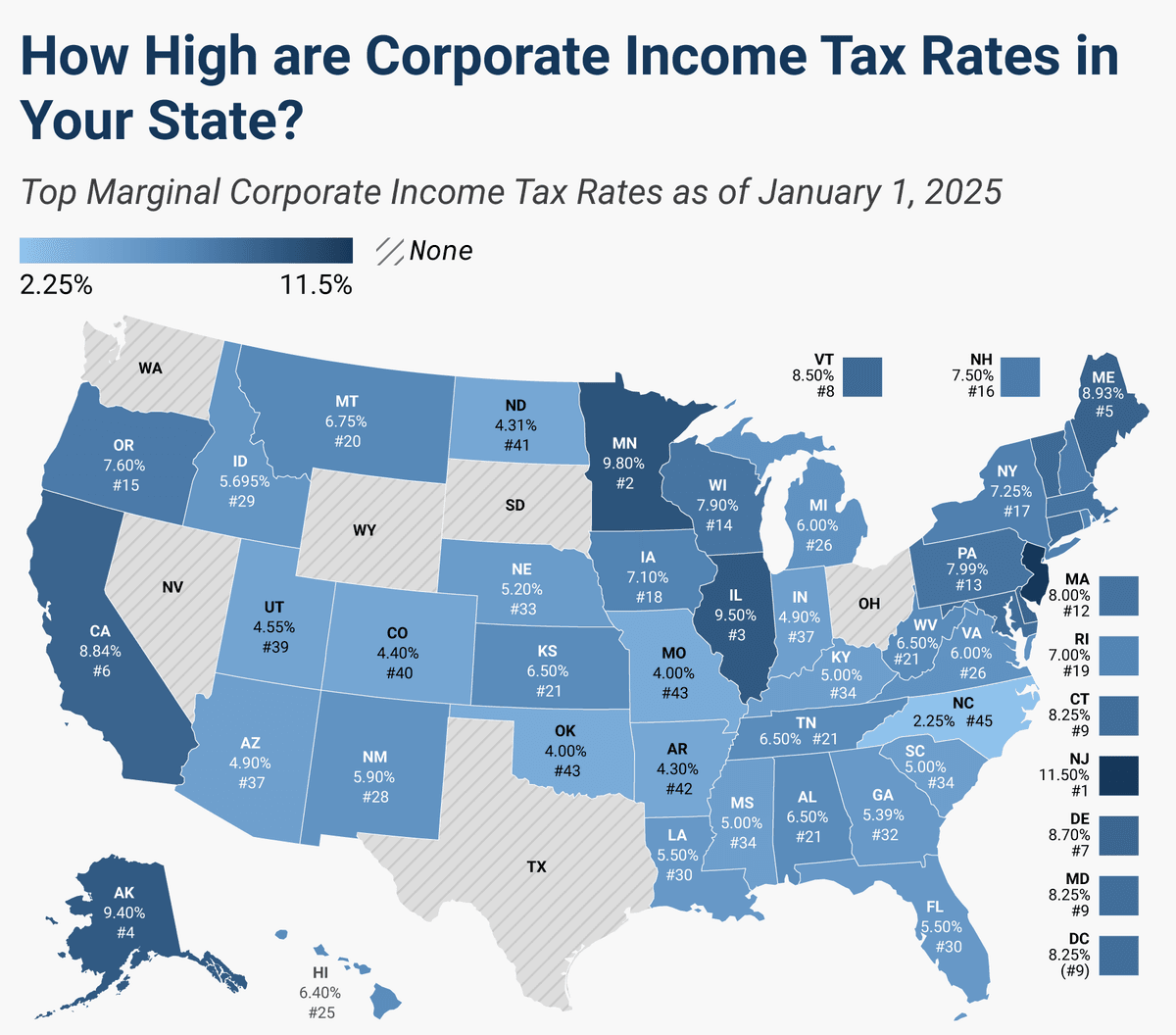
2025 State Corporate Tax Changes
|
|
| State |
2024 Rate |
2025 Rate |
Future Plans |
| Louisiana |
3.5% - 7.5% |
5.5% (Flat Rate) |
Franchise tax eliminated. |
| Nebraska |
6.50% |
5.20% |
Dropping to 3.99% by 2027 |
| North Carolina |
2.50% |
2.25% |
Phasing out by 2030. |
| Pennsylvania |
8.49% |
7.99% |
Reducing to 4.99% by 2031. |
|
|
2025 Tax Changes by State
| State |
2024 Tax Rate |
2025 Tax Rate |
Additional Notes |
| Indiana |
3.05% |
3.00% |
Gradual reductions planned. |
| Iowa |
5.70% |
3.80% |
Significant rate cut |
| Mississippi |
4.70% |
4.40% |
Further reductions expected in 2026. |
| North Carolina |
4.50% |
4.25% |
Continued phase-down. |
|
|
Tax Tips for Marriage Status Changes
If your marital status changes in 2024, it will impact your 2025 tax filing. The IRS determines your filing status based on your marital status as of December 31, 2024. Taxpayers who changed their names should update their records with the Social Security Administration (SSA) to avoid refund delays. Additionally, those who moved should update their address with USPS, employers, and the IRS. Married taxpayers should review their withholding amounts using the IRS Tax Withholding Estimator. For more details, including qualifications and exceptions, review IRS Publication 504.
More information
|
|
|
Big tax changes are coming in 2025! From disaster relief provisions and EV tax credit updates to corporate tax adjustments and IRS filing modifications, staying ahead of these updates is crucial. Don't let the shifting tax landscape catch you off guard SK Financial CPA is here to guide you every step of the way.
📢 Stay informed, stay prepared, and stay ahead! Follow SK Financial CPA on social media for real-time updates, expert insights, and tips to help you make the most of the 2025 tax season.
📞 Need personalized guidance? Contact us today and let’s navigate these changes together!
|
|
|
|
|