|
Dear Client,
Welcome to our latest newsletter, where we bring you the most critical updates and insights to keep you ahead in the dynamic world of tax and finance. In this edition, we delve into game-changing tax updates, including new IRS rules on retirement plans and employee retention credits, and explore local tax alternatives and their implications. We'll also cover emerging cybersecurity threats, recent legislative proposals, and provide valuable strategies for charitable donations and tax deductions. Stay informed on essential tax changes, optimize your financial strategies, and navigate the complexities of the current tax landscape with confidence. Read on to unlock essential tax strategies and ensure your financial success!
|
|
|
Guidance on Early Retirement Plan Distributions
In June 2024, the IRS issued important updates concerning various aspects of tax policy and administration. The agency provided new guidance on early retirement plan distributions under the SECURE 2.0 Act through Notice 2024-55, effective January 1, 2024.
- This notice clarifies the criteria for distributions that waive the additional tax for emergency personal expenses and domestic abuse survivors.
- 10% For emergency personal expenses, distributions must meet unforeseeable or immediate financial needs related to necessary personal or family emergency expenses and may be repaid to eligible plans.
- Similarly, distributions for domestic abuse survivors are available for IRAs and certain retirement plans under specific conditions, claimed within one year of domestic abuse by a spouse or domestic partner, and also offer repayment options. Retirement plans can incorporate these distributions, with further IRS regulations anticipated to provide additional clarity.
Crackdown on Improper Employee Retention Credit Claims
In response to concerns about improper Employee Retention Credit (ERC) claims, the IRS is enhancing efforts to deny erroneous claims and expedite processing for eligible ones. High-risk claims, constituting 10–20% of submissions, will be denied due to errors, while an equivalent percentage of low-risk claims will proceed with anticipated payments. The majority of claims will undergo additional scrutiny to ensure compliance. These measures have already resulted in significant savings and ongoing investigations into fraudulent claims, reflecting the IRS's commitment to safeguarding public funds
|
|
|
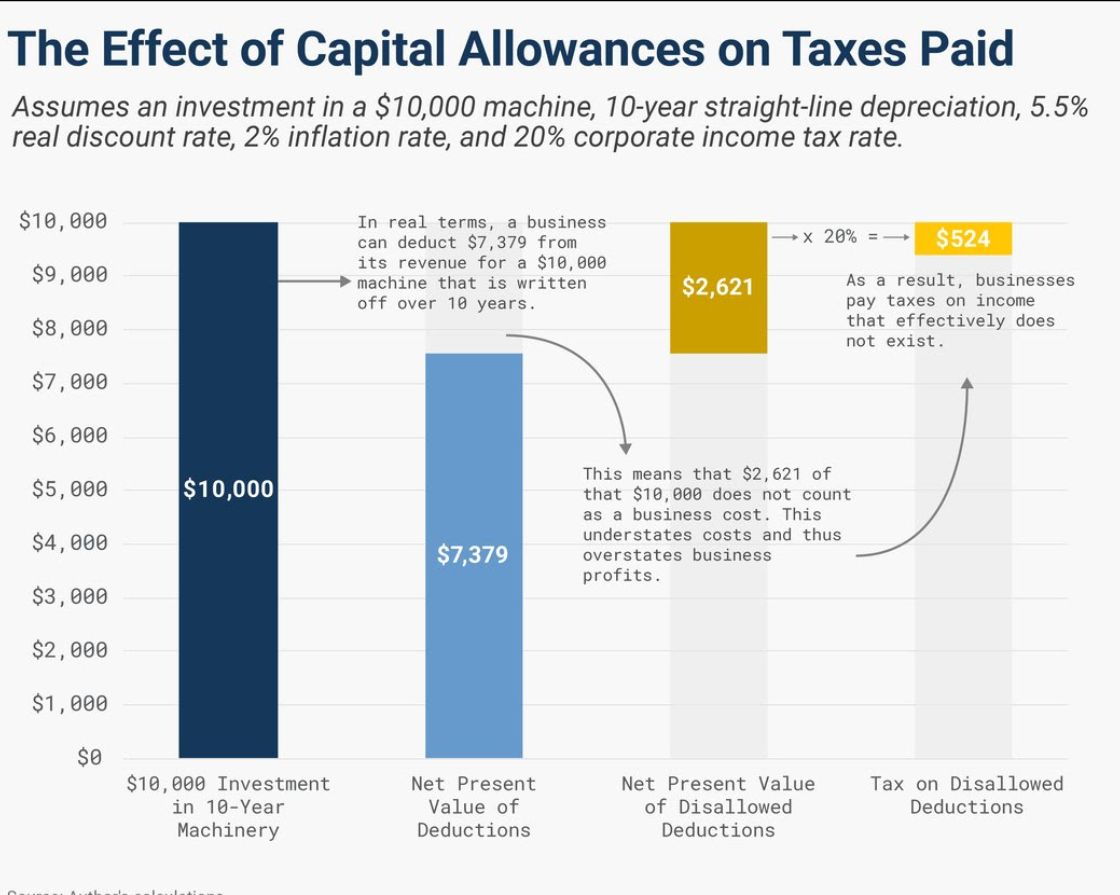
Capital Allowances on Taxes Paid
|
|
|
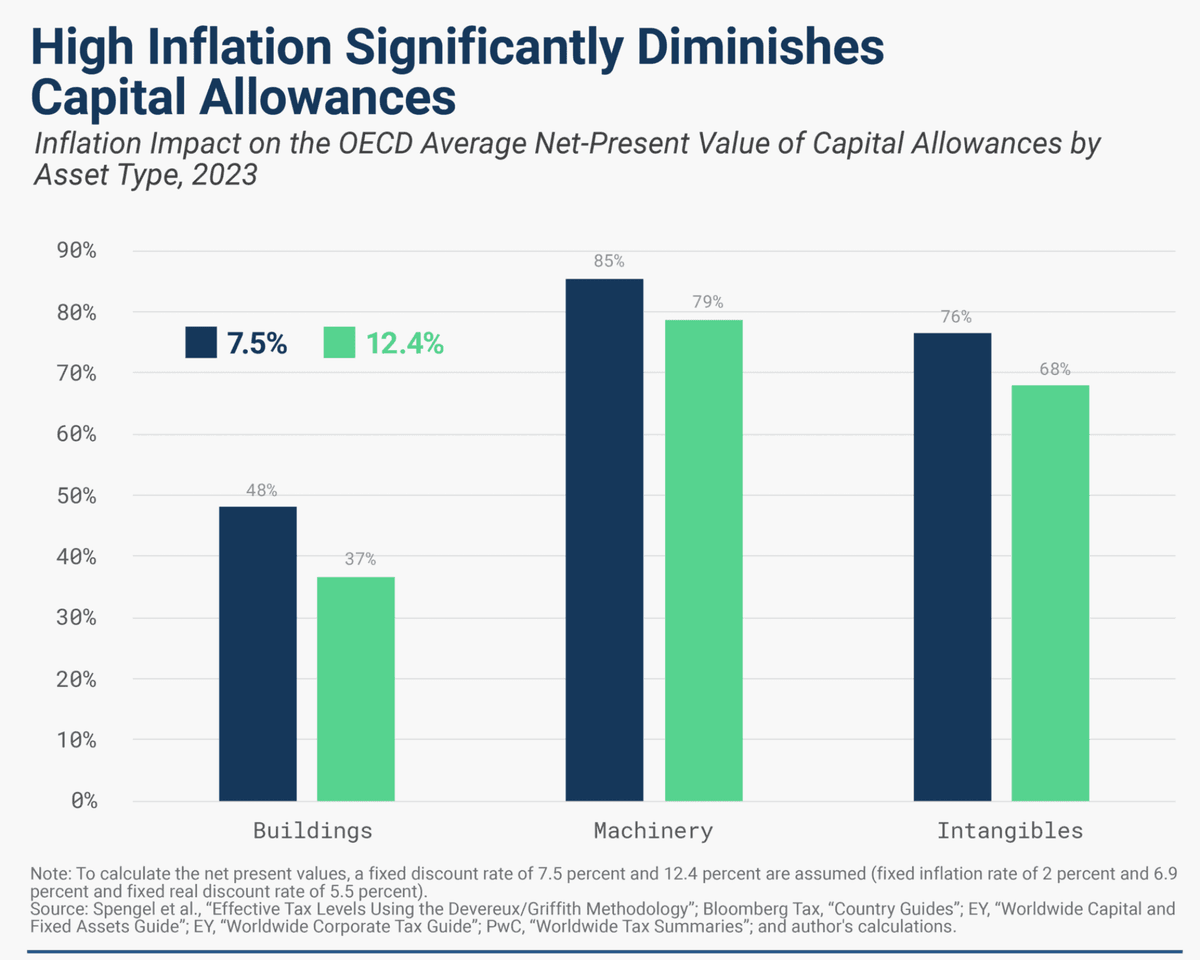
Considering the Critical Role of Capital Cost Recovery in Corporate Taxation
|
|
|
Local Revenue Sources
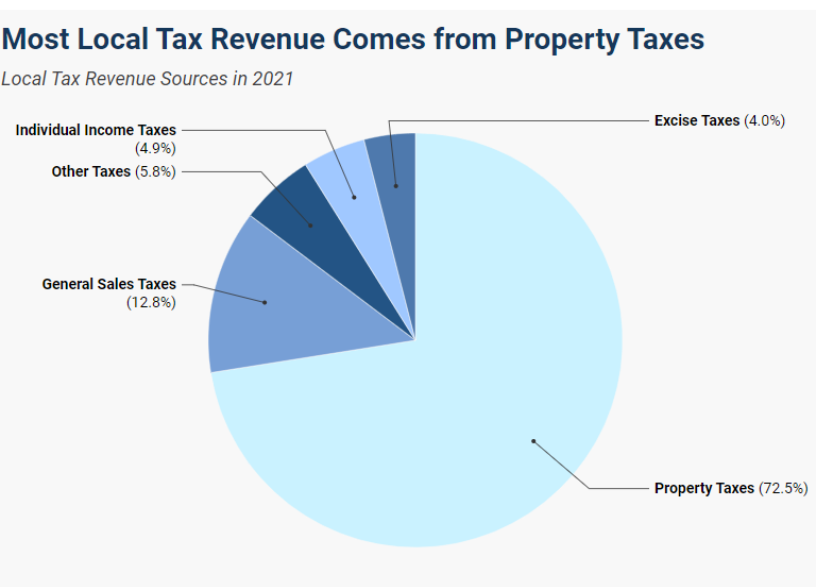
Local governments in the United States continue to explore alternatives to property taxes, which make up 72% of local tax revenue, to diversify their revenue streams. Local income taxes, while offering stable revenue and a progressive tax structure, can discourage work and investment due to administrative complexity. Conversely, local sales taxes are simpler to administer and encourage economic growth but they are regressive and subject to economic cycles. The debate between consumption-based (sales taxes) and income-based tax systems highlights the balance between encouraging savings, simplifying compliance, and addressing regressive impacts versus providing a stable revenue stream and administrative challenges.
|
|
|
AI and Cybersecurity Risks
The advent of generative AI tools, which enable users to generate text, code, and images, introduces significant security risks. Data breaches through AI chatbots, vulnerabilities to external control, and prompt injection attacks are major concerns. Despite the awareness of these risks, current cybersecurity measures are often insufficient. Major vendors like Google and ChatGPT face scrutiny over their security protocols, prompting recommendations for businesses to vet AI tool vendors, establish and enforce AI usage policies, restrict access to external AI applications, and utilize security tools from trusted vendors to monitor data usage and ensure compliance.
Emerging Cybersecurity Threats
Cybercriminals are increasingly leveraging AI for sophisticated attacks, including malicious software and targeted phishing campaigns. Supply chain attacks targeting third-party vendors and the challenges posed by deepfake technologies are emerging threats. Ongoing ransomware threats remain a critical issue, necessitating comprehensive cybersecurity measures such as regular software updates, two-factor authentication, employee training, and incident response plans.
|
|
Charitable Donations and Tax Deductions
Regarding charitable donations, tax deductions are only available for contributions to IRS-recognized 501(c)(3) charities. Donations to individuals or personal fundraising sites for specific individuals do not qualify for tax deductions. Recent Tax Court decisions have reinforced the importance of proper documentation and adherence to regulations for deductions, such as validating option agreements between related entities and disallowing deductions for legal fees from personal cases.
Legislative Proposals and IRS Programs
Legislative proposals and IRS programs continue to evolve. A proposed legislative measure aims to establish tax-advantaged savings accounts for children through state 529 plans. The IRS's Direct File option will expand in 2025 to cover individuals with more complex tax situations, reflecting ongoing efforts to simplify and improve tax filing processes.
Tax Cuts and Jobs Act (TCJA) Reforms
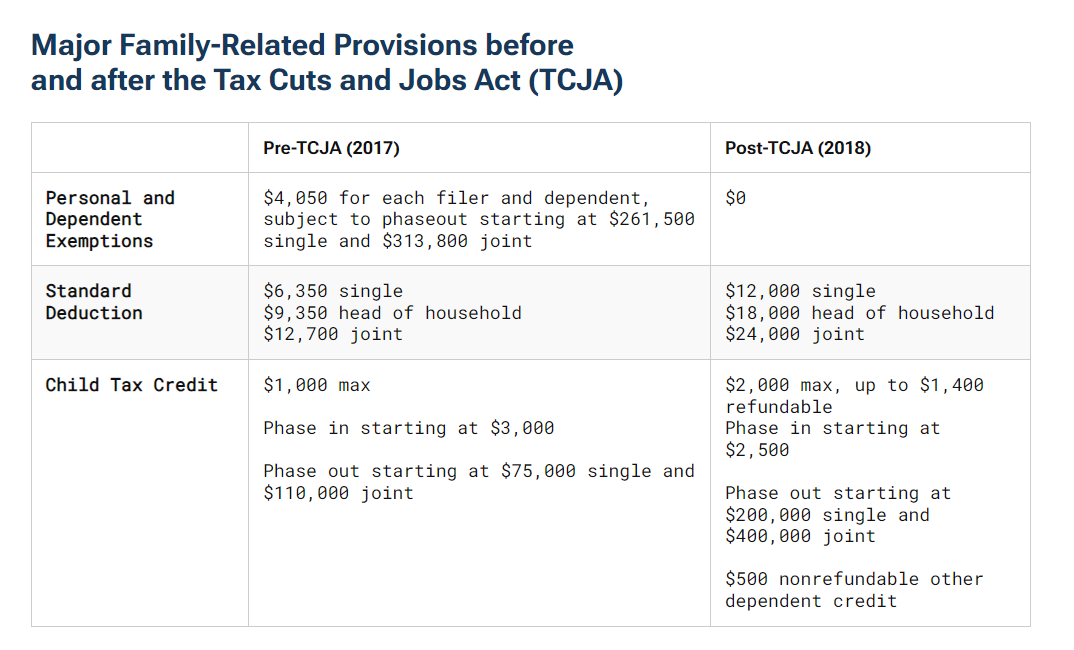
The Tax Cuts and Jobs Act (TCJA) introduced significant changes to family tax policies, such as increasing the standard deduction and child tax credit while eliminating personal and dependent exemptions. As policymakers consider 2025 tax reforms, assessing the impact and effectiveness of TCJA provisions will be crucial. Before the TCJA, the standard deduction was $6,350 for single filers and $12,700 for joint filers, with personal and dependent exemptions at $4,050 per filer and dependent. The TCJA increased the standard deduction to $12,000 for single filers, $18,000 for heads of household, and $24,000 for joint filers, while eliminating exemptions and increasing the child tax credit to $2,000 per child, with up to $1,400 refundable.
|
|
|
Employer-Provided Childcare Tax Credit
The Employer-Provided Childcare Tax Credit allows businesses to offset costs related to providing childcare services to employees, covering expenses for childcare facilities and resource/referral costs, with potential tax savings of up to $150,000 per year. Qualified costs include those related to acquiring, constructing, rehabilitating, or expanding property used for childcare facilities, as well as operational costs such as training for childcare workers, scholarships, and increased compensation for qualified staff. Businesses can claim this credit using Form 8882, and it is part of the general business credit with specific rules for carryback and carryforward.
|
|
|
Newlyweds and Tax Filing
For newlyweds, several steps can ease the tax filing process and potentially maximize tax benefits. Newlyweds should report any name changes to the SSA to prevent delays in their tax refund, update their address with the USPS, employers, and the IRS, check their withholding by providing employers with a new Form W-4 within 10 days of marriage, and decide whether to file jointly or separately each year, with joint filing generally offering more benefits. Additionally, they should stay vigilant against tax scams, as the IRS does not initiate contact via email, phone, social media, or text messages.
Appealing Rejected Offers in Compromise
Taxpayers have 30 days from the date on a rejection letter to request an appeal if their offer in compromise (OIC) is rejected by the IRS. To file an appeal, taxpayers should submit Form 13711 or send a detailed letter to the IRS office that issued the rejection, including specific details about their situation and reasons for reconsideration. Required documents for appeals include Form 433-B (OIC) for business entities and Form 433-A (OIC) for individuals, ensuring all information is accurate and supported by documentation.
|
|
|
|
Resolving Estimated Tax Payment Misallocation with the Georgia Department of Revenue
The client initially placed an estimated tax payment for 2022 under his business tax return. However, because the business is a pass-through entity, we later moved the payment to the client's personal tax return for 2022. Due to the substantial amount involved ($1.4 million), the Georgia Department of Revenue conducted an audit of the payment. Unfortunately, during the audit, the entire amount was incorrectly moved to the most recent year, 2023. As a result, when the 2022 return was processed, it showed no estimated tax payment, leading to a notice of tax due with penalties and interest totaling $200,000.
We promptly contacted the Georgia Department of Revenue to address this issue. After discussing the case, we successfully moved the estimated tax payment back to 2022, which covered the tax due. Consequently, the $200,000 penalty and interest were removed.
|
|
|
Stay connected with us through our social media channels and website for the latest updates and news in the finance world. Our dedicated team of experts is always here to assist you with any financial challenges, providing personalized support and valuable insights to help you achieve your financial goals. Follow us for timely updates, expert advice, and comprehensive resources to stay ahead in the ever-changing financial landscape.
|
|
|
|
|